Excellence in Tourism Leadership Program
Paige Hunt

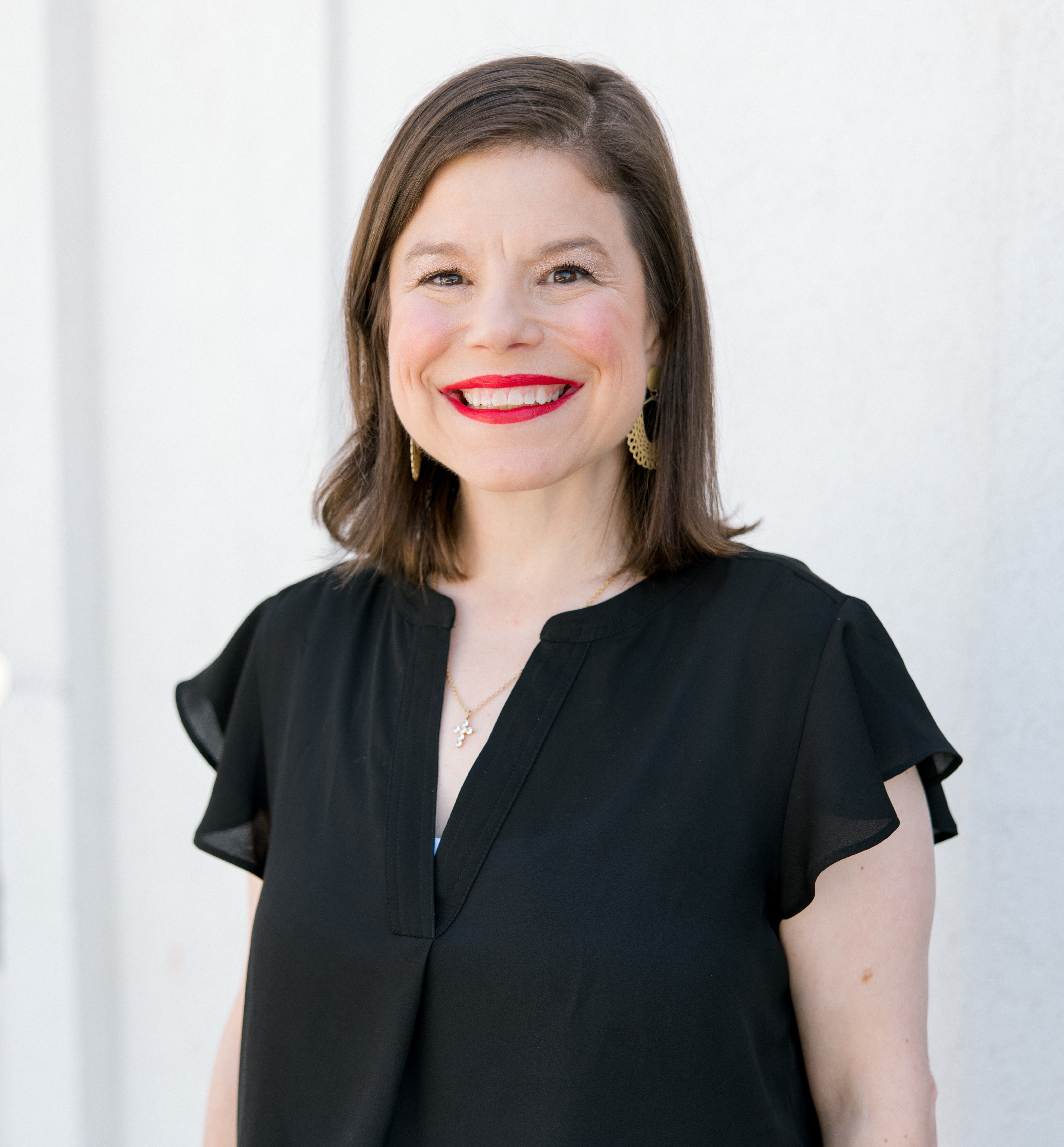
Interview With Paige Hunt
In tourism, it’s not enough to merely draw visitors into your city. You need to enhance their experience once they arrive.
Paige Hunt, who serves as director of tourism for Visit Starkville, knew she had a great product that attracted visitors from all around the nation -- namely Mississippi State University athletics. But, she felt it was time to explore an idea she had to improve on it -- an idea that had been on her mind for years.
Hunt’s journey began in Starkville some 25 years ago. The stops she made along the way include the Delta, the Jackson area and the Pine Belt before coming full circle when she returned to Starkville five years ago.
Hunt had the chance to make her vision a reality when she returned home.
“As someone who had been in Starkville, left and came back,” she said, “I had always wondered why we hadn’t done more directly with the Southeastern Conference. That’s a billion-dollar brand, and it would be great to find ways to piggyback on it. After all, the biggest part of our visitor profile is based on Mississippi State sports.”
She realized that any efforts to team up with the SEC would require some team building among the conference’s cities, and she started here in Mississippi. Her first phone call was to Kinney Ferris, tourism director in Oxford.
“I told her, ‘I think this is a real opportunity for us. We share a lot of the same issues, and we also share a lot of the same assets,’” Hunt recalls. “I wanted to get her input and share my thoughts with her -- kind of a ‘best practices’ sort of thing.”
One of the common problems faced by SEC cities, especially the smaller ones, is working around big athletic events.
“We work to bring in big events such as conventions,” Hunt explains, “and we often have to wait for the athletic schedules before making our plans. For instance, the football schedule didn't come out until this past December, and we were unable to book big meetings until we got the final version.
“If a non-athletic meeting we’re trying to book has a Friday or Saturday component,” she added, “we have to work around the football game because we don't have enough hotels in the city to accommodate both events.”
To address similar problems, Hunt and Ferris decided to set up a Zoom call that involved SEC cities in addition to Starkville and Oxford. At the time, the tourism director in Baton
Rouge was Paul Arrigo, a 25-year veteran of tourism in Louisiana and tourism in general arranged a meeting with SEC associate commissioner for communications Herb Vincent.
“Herb was the sports information director at LSU for a number of years, so he knew first-hand what we were talking about,” Hunt said. “Once we began talking, the ideas began to flow, and soon we reached out to other tourism professionals in the various SEC cities.”
With the concept of an organization of SEC cities taking form, the time was right to step things up.
“Most of us were planning to attend an upcoming tourism trade show in Birmingham,” Hunt recalls, “and we planned to get together while we were there. At this gathering, we decided to descend as a group on the SEC office a few months later.”
Around this time, she was enrolled in the Excellence in Tourism Certification program offered by the Mississippi State University Extension Service.
“It was timely, because some of the topics we covered really came into play,” Hunt said. “We were doing deep dives into topics like partnerships and best practices and those sorts of things. These sessions made me more aware that we needed to come up with ways to fully engage with the SEC. It hit me that we needed to figure out a way to sponsor something for them.
“My father always told me that people will take your call when you write a check,” she added.
Hunt offered to sponsor SEC media day.
“Kentucky may be known as a basketball school, and Mississippi State may be considered by many to be a baseball school, but football is the heavyweight,” she said. “We live in the South, and that's just the way it is. We have done that sponsorship for the past four years, and it’s been a success. And so, what started as a vehicle to explore best practices soon morphed into an active alliance.”
It didn’t take long for this ad hoc group to adopt a permanent status. A nonprofit organization was formed and registered with the Secretary of State's office in Jackson.
“We have bylaws, a checking account, membership dues, and soon we’ll be having annual meetings,” Hunt said. “We have really upped our presence at SEC media days. We had a booth set up with media kits and guides. The SEC really gets us now, and they even let us do a blog series on their website.”
She envisions making the organization even better and is looking for ways to expand the program.
“This year, MSU hosts Alabama, so we’re going to guest blog on the city of Tuscaloosa's website and tell Alabama fans coming to Starkville about all of our local attractions, but even if all they want to do is tailgate, we can still tell them where they can park and where they can tailgate,” she said. “We can make the visit a more enjoyable occasion.
“All our member cities have common experiences, common problems and common solutions that we can share. It is a good example of the partnership building that we studied in the Excellence in Tourism leadership course.”
Encouraged by their early success, the group (styled “Cities of the SEC”) continues to find ways to promote local tourism as part of the overall fan experience. The group has established a website (visitthesec.com) that features attractions in each destination city. Hunt said she believes this vehicle can be particularly advantageous to smaller cities in the conference.
“Starkville and Oxford are the only two destinations that don’t have year-round populations of at least 100,000 residents, so it becomes important for us to point out what there is to do other than attend the games,” she said. “For games in Baton Rouge, Austin, Nashville and the other big cities, a visitor can find out what's available through a lot of different sources. In the small destinations, our website performs that function all in one click.”
The smaller communities can also benefit from an SEC connection when it comes to sports other than football.
“The smaller towns are going to be filled to capacity on football weekends no matter what, but when it comes to sports such as basketball and baseball, we have an opportunity to sweeten the pot and encourage out-of-towners to come to the games,” Hunt said. “For instance, an out-of-state visitor for a baseball series can be in town for three days. By using visitthesec.com, we can inform them of other local attractions in addition to the game.”
The allied cities of the SEC are constantly seeking ways to improve the website. One of the latest innovations is a digital SEC Suitcase.
“It’s another arrow in our quiver,” Hunt said. “A visitor can click on visitthesec.com and get coupons for discounts at participating locations in the SEC city to which they plan to go -- a passbook of sorts. We feature 10 attractions in each city where a visitor can go and check in at these locations and earn points for awards such as branded sports gear.”
Paige believes the suitcase will appeal to one group of tourists in particular.
“There are 16 teams in the Southeastern Conference,” she said, “Visiting all 16 stadiums in the SEC is on the bucket lists for a lot of sports fans. This suitcase allows these bucket list fans to have a way to collect mementos from all the cities, namely a sticker to be placed on
their digital suitcase. They’re like the old-fashioned stickers that world travelers used to put on their Samsonites to let the world know where they’ve been.”
With a lot of work and planning, partnering with the SEC has become a reality, and Hunt found her training through the MSU Excellence in Tourism Certification Program to be both relevant and helpful.
“A lot of this Visit the SEC campaign employed some of the concepts covered in the Excellence in Tourism Certification Program,” she said. “The concepts of partnering and enhancement of the tourism product were all extensively covered in the curriculum. The time I spent during the certification process was an excellent networking opportunity that still pays dividends.”